
Westpfalz-Klinikum GmbH - Standort I Kaiserslautern
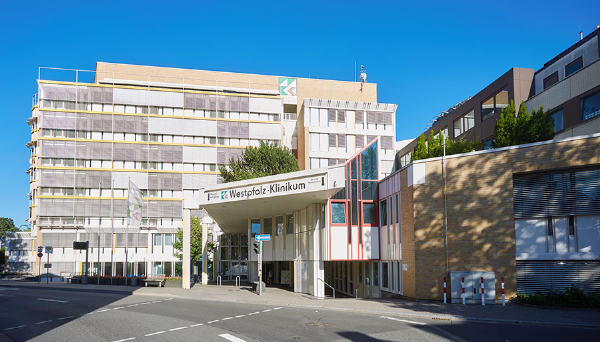
Hellmut-Hartert-Straße 1
67655 Kaiserslautern
Phone:
0631-203-0
Mail:
ed.mukinilk-zlafptsew@ofni
ed.mukinilk-zlafptsew@ofni
ed.mukinilk-zlafptsew@ofni
- Number of beds: 975
- Number of specialist departments: 22
- Number of inpatient cases: 36.147
- Number of partial inpatient cases: 265
- Number of outpatient cases: 80.290
- Hospital owners: Westpfalz-Klinikum GmbH
- Type of provider: öffentlich
- Academic teaching hospital
- Johannes Gutenberg-Universität Mainz
- Medizinische Fakultät Mannheim der Ruprecht-Karls-Universität Heidelberg
- Abteilung für Schmerztherapie
- Klinik für Hals-Nasen-Ohrenheilkunde
- Klinik für Herz-, Lungen- und Gefäßchirurgie
- Klinik für Innere Medizin 1 - Hämatologie und Onkologie
- Klinik für Innere Medizin 2 - Kardiologie, Pneumologie, Angiologie und Intensivmedizin
- Klinik für Innere Medizin 3 - Gastroenterologie, Hepatologie, Nephrologie, Transplantationsmedizin und Geriatrie
- Klinik für Kinder- und Jugendmedizin
- Klinik für Neurochirurgie und Wirbelsäulenchirurgie
- Klinik für Neurologie und Neurogeriatrie
- Klinik für Psychosomatik
- Klinik für Unfallchirurgie, Orthopädie und Handchirurgie
- Abteilung für Strahlentherapie
- Klinik für Urologie und Kinderurologie
- Palliativmedizin
- Zentrum für Radiologie
- Belegabteilung für Mund-, Kiefer- und Gesichtschirurgie
- Institut für Laboratoriumsmedizin
- Institut für Pathologie
- Klinik für Allgemein-, Viszeral-, Kinder- und Transplantationschirurgie
- Klinik für Anästhesie, Intensiv-, Notfallmedizin und Schmerztherapie 1
- Klinik für Augenheilkunde
- Klinik für Frauenheilkunde und Geburtshilfe 1
Further information
| Bezeichnung | |
| Teilnahme externe Qualitätssicherung | yes |
Koronare Herzkrankheit (KHK)
| Quantity performed | 163 |
| Exception? | No exception |
| Quantity performed | 94 |
| Exception? | No exception |
| Quantity performed | 21 |
| Exception? | No exception |
| Quantity performed | 40 |
| Exception? | No exception |
| Quantity performed | 25 |
| Exception? | No exception |
| Quantity performed | 43 |
| Exception? | No exception |
| Quantity performed | 32 |
| Exception? | No exception |
| Overall result forecast presentation: | yes |
| Quantity performed reporting year: | 163 |
| Quantity forecast year: | 205 |
| Examination by state associations? | yes |
| Exemption? | yes |
| Result of the examination by the federal state authorities? | yes |
| Transitional arrangement? | no |
| Overall result forecast presentation: | yes |
| Quantity performed reporting year: | 94 |
| Quantity forecast year: | 79 |
| Examination by state associations? | yes |
| Exemption? | yes |
| Result of the examination by the federal state authorities? | yes |
| Transitional arrangement? | no |
| Overall result forecast presentation: | yes |
| Quantity performed reporting year: | 21 |
| Quantity forecast year: | 27 |
| Examination by state associations? | yes |
| Exemption? | yes |
| Result of the examination by the federal state authorities? | yes |
| Transitional arrangement? | no |
| Overall result forecast presentation: | yes |
| Quantity performed reporting year: | 40 |
| Quantity forecast year: | 43 |
| Examination by state associations? | yes |
| Exemption? | yes |
| Result of the examination by the federal state authorities? | yes |
| Transitional arrangement? | no |
| Overall result forecast presentation: | yes |
| Quantity performed reporting year: | 25 |
| Quantity forecast year: | 25 |
| Examination by state associations? | yes |
| Exemption? | yes |
| Result of the examination by the federal state authorities? | yes |
| Transitional arrangement? | no |
| Overall result forecast presentation: | yes |
| Quantity performed reporting year: | 43 |
| Quantity forecast year: | 31 |
| Examination by state associations? | yes |
| Exemption? | yes |
| Result of the examination by the federal state authorities? | yes |
| Transitional arrangement? | no |
| Overall result forecast presentation: | yes |
| Quantity performed reporting year: | 32 |
| Quantity forecast year: | 35 |
| Examination by state associations? | yes |
| Exemption? | yes |
| Result of the examination by the federal state authorities? | yes |
| Transitional arrangement? | no |
| No. | Explanation |
|---|---|
| CQ01 | Quality assurance measures for inpatient care with the indication abdominal aortic aneurysm |
| CQ05 | Measures for quality assurance in the care of pre-term and full-term neonates – Perinatal Centre LEVEL 1 |
| CQ25 | Measures for quality assurance in the performance of minimally invasive heart valve interventions pursuant to Article 136, para. 1, sentence 1, number 2 for hospitals licensed in accordance with Article 108 of the SGB V |
| CQ31 | Guideline for the care of proximal femur fractures (QSFFx-RL) |
- Clarifying chat completed: no
- Clarifying chat not completed: no
- No participation in clarifying chat: no
- Notification of non-fulfilment of nursing care not made: yes
quarter Q1
Psychosomatik
| Day shift | ||
|---|---|---|
| Compliance with minimum requirements | no | |
| Level of implementation | 130,0 % | |
| Occupational group | Minimum requirements met | Level of implementation (%) |
| Ärztinnen und Ärzte, ärztliche Psychotherapeutinnen und Psychotherapeuten | ja | 217,12 % |
| Pflegefachpersonen | ja | 106,37 % |
| Psychotherapeutinnen und Psychotherapeuten (ohne ärztliche Psychotherapeutinnen und Psychotherapeuten), Psychologinnen und Psychologen | ja | 213,02 % |
| Spezialtherapeutinnen und Spezialtherapeuten | nein | 6,3 % |
| Bewegungstherapeutinnen und Bewegungstherapeuten, Physiotherapeutinnen und Physiotherapeuten | ja | 148,27 % |
| Sozialarbeiterinnen und Sozialarbeiter, Sozialpädagoginnen und Sozialpädagogen, Heilpädagoginnen und Heilpädagogen | ja | 196,33 % |
quarter Q2
Psychosomatik
| Day shift | ||
|---|---|---|
| Compliance with minimum requirements | no | |
| Level of implementation | 104,0 % | |
| Occupational group | Minimum requirements met | Level of implementation (%) |
| Ärztinnen und Ärzte, ärztliche Psychotherapeutinnen und Psychotherapeuten | ja | 181,47 % |
| Pflegefachpersonen | nein | 86,86 % |
| Psychotherapeutinnen und Psychotherapeuten (ohne ärztliche Psychotherapeutinnen und Psychotherapeuten), Psychologinnen und Psychologen | ja | 161,05 % |
| Spezialtherapeutinnen und Spezialtherapeuten | nein | 5,08 % |
| Bewegungstherapeutinnen und Bewegungstherapeuten, Physiotherapeutinnen und Physiotherapeuten | ja | 141,85 % |
| Sozialarbeiterinnen und Sozialarbeiter, Sozialpädagoginnen und Sozialpädagogen, Heilpädagoginnen und Heilpädagogen | ja | 136,3 % |
quarter Q3
Psychosomatik
| Day shift | ||
|---|---|---|
| Compliance with minimum requirements | no | |
| Level of implementation | 123,0 % | |
| Occupational group | Minimum requirements met | Level of implementation (%) |
| Ärztinnen und Ärzte, ärztliche Psychotherapeutinnen und Psychotherapeuten | ja | 253,07 % |
| Pflegefachpersonen | ja | 102,45 % |
| Psychotherapeutinnen und Psychotherapeuten (ohne ärztliche Psychotherapeutinnen und Psychotherapeuten), Psychologinnen und Psychologen | ja | 139,8 % |
| Spezialtherapeutinnen und Spezialtherapeuten | nein | 9,85 % |
| Bewegungstherapeutinnen und Bewegungstherapeuten, Physiotherapeutinnen und Physiotherapeuten | ja | 114,48 % |
| Sozialarbeiterinnen und Sozialarbeiter, Sozialpädagoginnen und Sozialpädagogen, Heilpädagoginnen und Heilpädagogen | nein | 82,1 % |
quarter Q4
Psychosomatik
| Day shift | ||
|---|---|---|
| Compliance with minimum requirements | no | |
| Level of implementation | 133,0 % | |
| Occupational group | Minimum requirements met | Level of implementation (%) |
| Ärztinnen und Ärzte, ärztliche Psychotherapeutinnen und Psychotherapeuten | ja | 197,63 % |
| Pflegefachpersonen | ja | 113,05 % |
| Psychotherapeutinnen und Psychotherapeuten (ohne ärztliche Psychotherapeutinnen und Psychotherapeuten), Psychologinnen und Psychologen | ja | 185,67 % |
| Spezialtherapeutinnen und Spezialtherapeuten | nein | 15,12 % |
| Bewegungstherapeutinnen und Bewegungstherapeuten, Physiotherapeutinnen und Physiotherapeuten | ja | 96,91 % |
| Sozialarbeiterinnen und Sozialarbeiter, Sozialpädagoginnen und Sozialpädagogen, Heilpädagoginnen und Heilpädagogen | ja | 151,7 % |
| Number | Group |
|---|---|
| 291 | Medical specialists (m/f) , psychological psychotherapists (m/f) and child and adolescent psychotherapists (m/f) who are subject to the obligation to undergo further training* |
| 176 | Number of medical specialists (m/f) from no. 1 who have completed a five-year period of further training and are therefore subject to the obligation to provide evidence |
| 63 | Number of those persons from no. 2 who have provided proof of further training according to Article 3 of the G-BA regulations |
According to Section 4 (2) of the Quality Management Guideline, facilities must provide for the prevention of and intervention in cases of violence and abuse as part of their internal quality management. The aim is to prevent, recognise and respond appropriately to abuse and violence, particularly against vulnerable patient groups such as children and adolescents or people in need of help, and also to prevent it within the facility. The respective procedure is aligned with the size of the facility, the range of services and the patients in order to define customised solutions for sensitising the teams as well as other suitable preventative and interventional measures. These may include information materials, contact addresses, training/education, codes of conduct, recommendations for action/intervention plans or comprehensive protection concepts.
- Is a protection concept in place? Yes
- Measures
-
Prevention
- Note on the measure
Konzept zur Gewährleistung des Kinderschutzes im Westpfalz-Klinikum
- Note on the measure
Konzept zur Gewährleistung des Kinderschutzes im Westpfalz-Klinikum
- Note on the measure
Konzept zur Gewährleistung des Kinderschutzes im Westpfalz-Klinikum
- Note on the measure
Konzept zur Gewährleistung des Kinderschutzes im Westpfalz-Klinikum
- Last review of the measure
06.03.2023 20:29:23
- Note on the measure
Konzept zur Gewährleistung des Kinderschutzes im Westpfalz-Klinikum
- Note on the measure
Konzept zur Gewährleistung des Kinderschutzes im Westpfalz-Klinikum
Other aspects of prevention
- Note on the measure
-
Intervention
- Note on the measure
Konzept zur Gewährleistung des Kinderschutzes im Westpfalz-Klinikum
- Last review of the measure
06.03.2023 20:29:23
Other aspects of intervention
- Note on the measure
-
Review
- Note on the measure
Konzept zur Gewährleistung des Kinderschutzes im Westpfalz-Klinikum
- Last review of the measure
06.03.2023 20:29:23
Other information on recognition
- Note on the measure
-
Prevention
- Konzept zur Gewährleistung des Kinderschutzes im Westpfalz-Klinikum
- Drug commission
Training of employees on AMTS related topics
Qualitätsmanagementkonzept
20.11.2024
Qualitätsmanagementkonzept
20.11.2024
Betriebsanweisung zum sicheren Umgang mit Arzneimitteln im Westpfalz-Klinikum
23.04.2024
Provision of one or more electronic drug information systems (e.g. Lauer-Taxe®, ifap klinikCenter®, Gelbe Liste®, Fachinfo-Service®)
- Bereitstellung einer geeigneten Infrastruktur zur Sicherstellung einer fehlerfreien Zubereitung
- Zubereitung durch pharmazeutisches Personal
- Anwendung von gebrauchsfertigen Arzneimitteln bzw. Zubereitungen
- Fallbesprechungen
- Maßnahmen zur Vermeidung von Arzneimittelverwechslung
- Teilnahme an einem einrichtungsübergreifenden Fehlermeldesystem (siehe Kapitel 12.2.3.2)
- Aushändigung des Medikationsplans
- bei Bedarf Arzneimittel-Mitgabe oder Ausstellung von Entlassrezepten
- Admission to hospital, including anamnesis
; Instruments and measures are presented for determining the old medication (drug history), the subsequent clinical assessment and the switch to the medication available in the hospital (house list), as well as for documenting both the patient's original medication and that for hospital treatment adapted medication.
- Medication process in the hospital
In this context, the following sub-processes are assumed as examples: drug history - prescription - patient information - drug delivery - drug use - documentation - therapy monitoring - result assessment. Instruments and measures for safe medication prescription can be presented, e.g. B. in terms of readability, clarity and completeness of the documentation, but also in terms of area of application, effectiveness, benefit-risk ratio, tolerability (including potential contraindications, interactions, etc.) and resource considerations. Information can also be provided to support reliable medication ordering, delivery and use or administration.
- Discharge
In particular, the measures taken by hospitals can be presented to ensure that information on drug therapy is structured and passed on to doctors and physicians providing further treatment, as well as the appropriate provision of patients with drug information, medication plans and medications. Drug prescriptions are made.
Job
FL01 - Lectureships / teaching posts at colleges and universities
Explanation
FL03 - Student training (clinical traineeship / internship year)
Explanation
FL04 - Project-related cooperation with colleges and universities
Explanation
FL06 - Participation in multi-centre phase III/IV studies
Explanation
FL09 - Doctoral supervision
Explanation
Training in other healing professions
HB03 - Physical therapist / physiotherapist (m/f)
Comment
Comment
Das Westpfalz-Klinikum bietet Plätze für die praktische Ausbildung an.
Comment
Das Westpfalz-Klinikum bietet Plätze für die praktische Ausbildung an. Seit 01.10.2023 eigene OTA-Schule.
Comment
Das Westpfalz-Klinikum bietet Plätze für die praktische Ausbildung an.
Comment
Berufsbezeichnung seit 2019 Gesundheits- und Krankenpflegehelfer/-in.
HB19 - Nursing professionals
Comment
HB20 - Nursing professional B. Sc.
Comment
Comment
Seit 01.10.2023 eigene ATA-Schule.
- Hospital staff
- Number of pharmacists: 7
- Additional staff: 7
Herr Michael Krauß
Patientenfürsprecher Standort Kaiserslautern
Hellmut-Hartert-Straße 1
67655 Kaiserslautern
Phone:
0631
-203-1326
Mail:
ed.mukinilk-zlafptsew@ofni
Herr Walfried Weber
Patientenfürsprecher Standort Kaiserslautern
Hellmut-Hartert-Straße 1
67655 Kaiserslautern
Phone:
0631
-203-1324
Mail:
ed.mukinilk-zlafptsew@rehcerpsreufnetneitap
Frau Andrea Molter
Sachbearbeitung Qualitäts- u. Risikomanagement
Hellmut-Hartert-Straße 1
67655 Kaiserslautern
Phone:
0631
-203-2010
Mail:
ed.mukinilk-zlafptsew@kcabdeef
Frau Paula Wynne
Abteilungsleitung QM/RM/PM
Hellmut-Hartert-Straße 1
67655 Kaiserslautern
Phone:
0631
-203-1877
Mail:
ed.mukinilk-zlafptsew@ennywp
Frau Paula Wynne
Qualitätsmanagerin; Abteilungsleitung QM/RM/PM
Hellmut-Hartert-Straße 1
67655 Kaiserslautern
Phone:
0631
-203-1877
Mail:
ed.mukinilk-zlafptsew@ennywp
Frau Sarah Gebhardt
Chefapothekerin
Hellmut-Hartert-Straße 1
67655 Kaiserslautern
Phone:
0631
-203-83720
Mail:
ed.mukinilk-zlafptsew@tdrahbegs
Herr Andreas Werner
Chefapotheker
Hellmut-Hartert-Straße 1
67655 Kaiserslautern
Phone:
0631
-203-83720
Mail:
ed.mukinilk-zlafptsew@renrewsaerdna
Frau Heike Guttenbacher
Qualitätsbeauftragte für Pflege
Hellmut-Hartert-Straße 1
67655 Kaiserslautern
Phone:
0631
-203-1849
Mail:
ed.mukinilk-zlafptsew@rehcabnettugh
67655 Kaiserslautern
Phone:
0631-203-0
Mail:
ed.mukinilk-zlafptsew@ofni
Frau Andrea Bergsträßer
Pflegedirektorin
Hellmut-Hartert-Straße 1
67655 Kaiserslautern
Phone:
0631
-203-1667
Mail:
ed.mukinilk-zlafptsew@resseartsgreba
Elena Stirnemann
Stv. Pflegedirektorin Standort Kaiserslautern
Hellmut-Hartert-Straße 1
67655 Kaiserslautern
Phone:
0631
-203-81747
Mail:
ed.mukinilk-zlafptsew@nnamenritse
Herr Thorsten Hemmer
Geschäftsführer
Hellmut-Hartert-Straße 1
67655 Kaiserslautern
Phone:
0631
-203-1230
Mail:
ed.mukinilk-zlafptsew@ofni
Herr Thorsten Hemmer
Geschäftsführer
Hellmut-Hartert-Straße 1
67655 Kaiserslautern
Phone:
0631
-203-1230
Mail:
ed.mukinilk-zlafptsew@ofni
Prof. Dr. med. Hagen Loertzer
Stv. Ärztlicher Direktor
Hellmut-Hartert-Straße 1
67655 Kaiserslautern
Phone:
0631
-203-1279
Mail:
ed.mukinilk-zlafptsew@oru
Prof. Dr. med. Karlheinz Seidl
Ärztlicher Direktor
Hellmut-Hartert-Straße 1
67655 Kaiserslautern
Phone:
0631
-203-1884
Mail:
ed.mukinilk-zlafptsew@ldiesk
IK: 260730025
Location number: 772988000
Chest Pain Unit
Certified until: 07.2027
EndoProthetikZentrum
Certified until: 01.2028
Interdisziplinäre Zentren für Dialysezugänge
Certified until: 10.2026
TraumaZentrum
Certified until: 04.2027
Überregionales Heart Failure Unit-Zentrum
Certified until: 12.2029